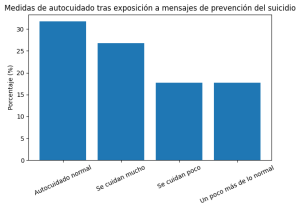
Medidas de autocuidado tomadas después de la exposición, como buscar ayuda profesional, hablar con amigos o familiares, etc.
Al analizar el nivel de cambios de comportamiento, se pasa a observar las medidas de autocuidado después de visualizar mensajes de prevención de suicidio. Un 31,7% de los encuestados mencionan que las personas tienden a autocuidarse de manera normal, un 26,8% manifiesta que las personas tienden a cuidarse mucho después de visualizar este tipo de mensaje, siendo una dicotomía al percibir que un 17,7% cree que se cuidan poco con un 17,7% que cree que se cuida un poco más de lo normal. En el artículo escrito por la OMS (2024) en Who, menciona que las intervenciones de autocuidado pueden ser medicamentos, dispositivos, métodos de diagnóstico y también las herramientas digitales. Se agrega en ese artículo que, las medidas de autocuidado contienen prácticas, hábitos y elecciones en relación con el estilo de vida.
Etiquetas: Prevención del suicidio; comunicación responsable; redes sociales; juventud; salud mental
The paper analyzes how responsible communication on social media can contribute to suicide prevention among young people. Based on background that links non-sensationalist messages to lower stigma and greater access to help, the study uses a mixed methodology: content analysis on Instagram, TikTok, X/Twitter, and Facebook, online surveys, and interviews with young people and professionals. Variables such as perception, stigma, peer support, and use of resources are analyzed, along with a thematic qualitative analysis.
The results show that this type of communication increases the willingness to seek help, the sharing of coping content, and clicks to support resources. The personalization of responses and practical guides on “what to say and what not to say” are also positively valued.
When analyzing the level of behavior changes, attention is turned to observing self-care measures after viewing suicide prevention messages. 31.7% of respondents mention that people tend to take care of themselves normally, 26.8% state that people tend to take much care of themselves after viewing this type of message, creating a dichotomy when perceiving that 17.7% believe they take little care of themselves compared to 17.7% who believe they take a little more care than normal. In the article written by the WHO (2024) in WHO, it mentions that self-care interventions can include medications, devices, diagnostic methods, as well as digital tools. The article adds that self-care measures include practices, habits, and choices related to lifestyle.
Tags: Suicide prevention; responsible communication; social networks; youth; mental health